Letter A - Heraldry, Royal Logo: A Unique Symbol of Identity and Legacy
The use of the letter "A" in heraldry and royal logos is a distinctive element that carries historical, symbolic, and aesthetic significance. While many heraldic symbols and royal emblems are complex, the simplicity of the letter "A" can make it both powerful and versatile. This article explores what makes Letter a - Heraldry, Royal Logo unique, how it compares to other symbols, and when it might be the best choice for representing identity, authority, or heritage.
Understanding Letter A in Heraldry and Royal Logos
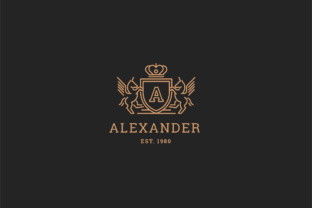
In heraldry, symbols are used to represent families, institutions, or individuals, often with specific meanings tied to their design. The letter "A" is not as commonly used as other symbols like lions, eagles, or crosses, but its presence can convey distinct messages. When incorporated into a coat of arms or royal logo, the "A" may stand for a name, an abbreviation, or a symbolic concept such as "Alpha," representing leadership or primacy.
The simplicity of the letter "A" allows it to be integrated into more intricate designs without overwhelming the overall composition. In royal logos, this clarity can help maintain a sense of elegance and timelessness. For example, some royal houses or noble families might use the letter "A" as a central motif, either alone or combined with other elements like crowns, stars, or shields.
How Letter A Compares to Other Heraldic Symbols
When compared to more traditional heraldic symbols, the letter "A" offers a different kind of visual impact. While animals, geometric shapes, and abstract designs often carry well-established meanings, the "A" requires more context to fully convey its message. This can be both a strength and a limitation, depending on the intended use.
For instance, a lion in heraldry typically represents courage, while a dragon might symbolize power or danger. The letter "A," by contrast, is more neutral and open to interpretation. This neutrality can be advantageous when the goal is to create a modern or minimalist emblem, but it may also require additional explanation to communicate the desired meaning effectively.
Compared to other alphabetic symbols, such as "B" or "C," the "A" has a more prominent and recognizable form. Its vertical lines and sharp angles can evoke a sense of strength and stability, making it suitable for organizations or individuals seeking a bold yet simple identity.
Strengths and Tradeoffs of Using Letter A
The primary strength of Letter a - Heraldry, Royal Logo lies in its versatility and adaptability. It can be easily modified through color, size, and placement to fit different contexts. Whether used in a traditional coat of arms or a contemporary corporate logo, the "A" can serve as a strong visual anchor.
Another advantage is its potential for personalization. Since the letter "A" can represent initials, names, or even concepts like "Alpha," it allows for a high degree of customization. This makes it particularly appealing for individuals or families looking to create a unique and meaningful emblem.
However, there are tradeoffs to consider. The lack of inherent symbolism means that the "A" may not immediately convey the same level of meaning as more traditional symbols. This could be a drawback in settings where instant recognition is important. Additionally, overuse of the letter "A" in logos or heraldry might lead to confusion, especially if multiple entities use similar designs.
Best-Fit Situations for Letter A
Letter a - Heraldry, Royal Logo is most effective in situations where simplicity, clarity, and personalization are key. For example, it may be ideal for:
- Noble families or individuals looking for a modern take on traditional heraldry.
- Organizations that want a clean, professional logo without excessive detail.
- Artists or designers seeking a minimalistic symbol to represent their work or brand.
- Cultural or historical projects that aim to highlight the significance of the letter "A" in symbolism and identity.
In these cases, the "A" can serve as a strong, memorable symbol that aligns with the values or goals of the entity it represents.
When Alternatives Might Be Better
While the letter "A" has its advantages, there are scenarios where alternative symbols may be more appropriate. For instance, if the goal is to communicate a specific trait—such as bravery, wisdom, or protection—using a more traditional heraldic symbol could be more effective. A sword, for example, clearly conveys strength and valor, whereas the "A" would require additional context to achieve the same effect.
Similarly, in cases where immediate recognition is crucial, such as in national emblems or well-known brands, using a more established symbol may be preferable. The letter "A" might not have the same level of familiarity as a lion or an eagle, which could limit its effectiveness in certain contexts.
Additionally, for those who prefer a more ornate or elaborate design, the "A" might feel too simplistic. In such cases, combining it with other elements—like a crown, a shield, or a crest—can help balance its minimalism while maintaining its unique character.
Realistic Examples and Practical Comparisons
To illustrate the differences between Letter a - Heraldry, Royal Logo and other symbols, consider the following examples:
- Traditional Heraldry: A family crest featuring a lion and a crown communicates power and nobility. In contrast, a crest with the letter "A" surrounded by a circle might suggest individuality and leadership, but would require more explanation to convey the same meaning.
- Modern Logos: A tech startup might use a stylized "A" as its logo to emphasize innovation and simplicity. A competitor with a more complex symbol, such as a gear or a circuit board, could appeal to a different audience or market segment.
- Cultural Symbols: In some cultures, the letter "A" may hold special significance, such as representing the beginning or the first principle. This can make it a meaningful choice for certain groups or communities.
These comparisons highlight how the choice of symbol depends on the goals, audience, and context of the design.
Conclusion: Choosing the Right Symbol for Your Needs
The decision to use Letter a - Heraldry, Royal Logo depends on several factors, including the desired message, the target audience, and the overall design philosophy. While it offers a clean, adaptable, and personalized approach, it may not always be the best fit for every situation.
By understanding its strengths and limitations, individuals and organizations can make informed choices about whether the letter "A" is the right symbol for their needs. Whether used in heraldry, branding, or cultural representation, the "A" remains a powerful and flexible option for those seeking a meaningful and distinctive identity.